What Determines a Custom Merino Sweater Price?

Ask three knitwear factories for a custom merino sweater price and you will get three numbers that do not compare. One quotes yarn and knitting only. One assumes a lighter garment than you sketched. One includes labels and pressing, the others do not. None of them is lying; they are answering different questions. This guide explains what actually sits inside a merino sweater unit cost, so that you can read a quote, ask the right follow-up, and compare factories on the same basis. It does not give a price — that depends on your yarn, weight and quantity — but it shows you where the number comes from.
A sweater price is not yarn weight times a rate
Buyers often try to estimate knitwear manufacturing cost as grams of yarn multiplied by a yarn price. That is the raw material line, and in a fine-merino sweater it is a large share of the total, but it is not the garment. Two sweaters labelled 100% merino can differ in micron, yarn count, ply, finish, gauge, construction and trims — and every one of those moves the price. Before comparing quotes, make sure both factories are pricing the same garment.
What is already inside a finished-garment price
A finished sweater goes through several paid stages after the yarn arrives. A proper unit price includes all of them; a price that stops at knitting is not a garment you can ship.
- Knitting: front, back and sleeves are knitted to the confirmed gauge and weight on a programmed flat-knitting machine
- Linking: neck, shoulders and sleeves are joined by hand-guided linking. Linking time depends on the collar and construction, so a shawl collar or set-in sleeve costs more to assemble than a simple crew
- Washing: the garment is washed to set hand-feel, shrinkage and colour. Finished weight is measured after washing, not on the raw knitted panels
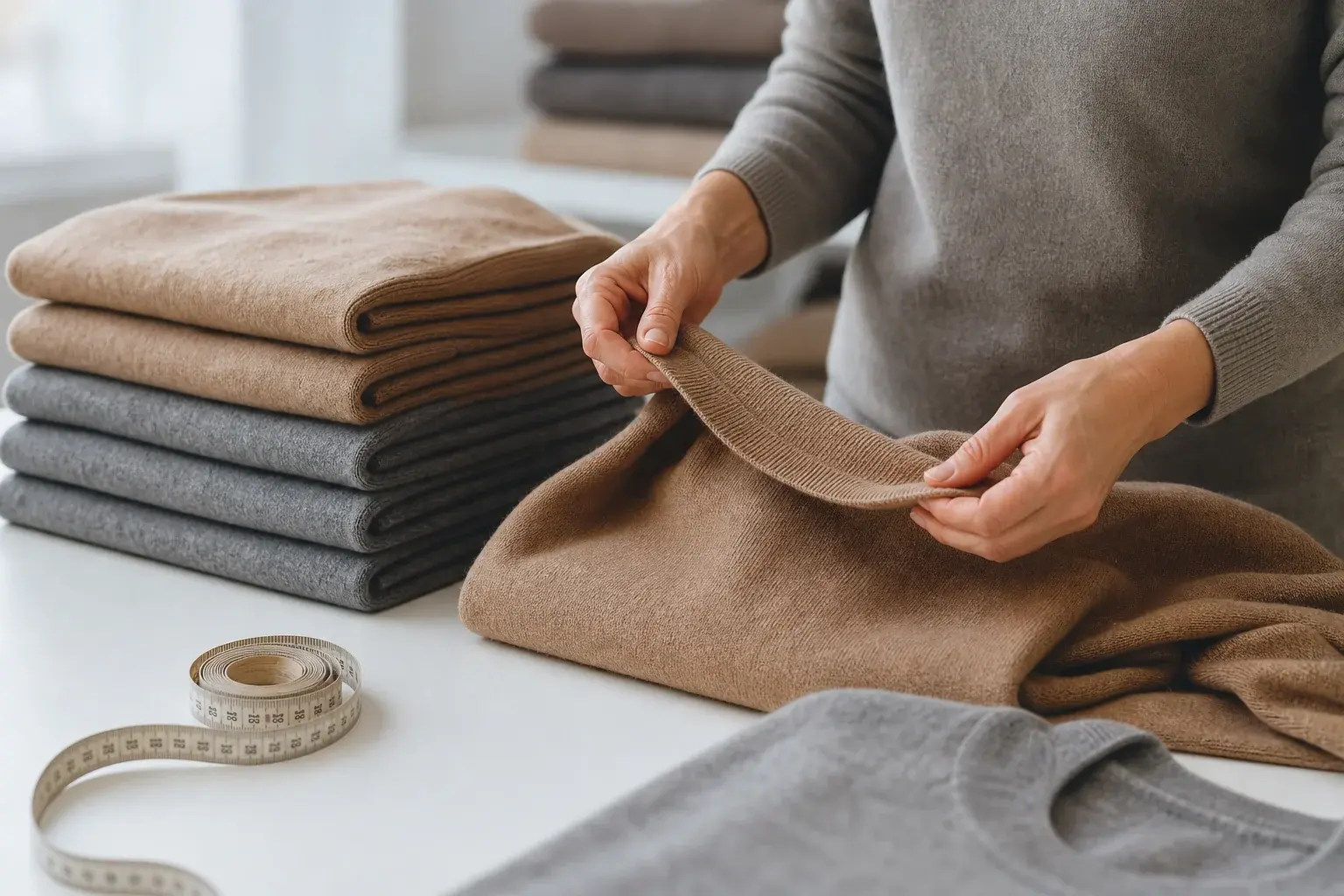
- Pressing and finishing: steaming to shape, so that the garment measures correctly and is ready for inspection and packing
- Inspection and packing: measurement check, visual check, folding and poly-bagging before the carton leaves
Knitwear linking, washing and pressing are not optional extras that a buyer can remove to lower the price. They are what turns knitted panels into a sweater. Embroidery, custom labels and hangtags are quoted separately because not every order uses them — more on that below.
Yarn weight and count set the base
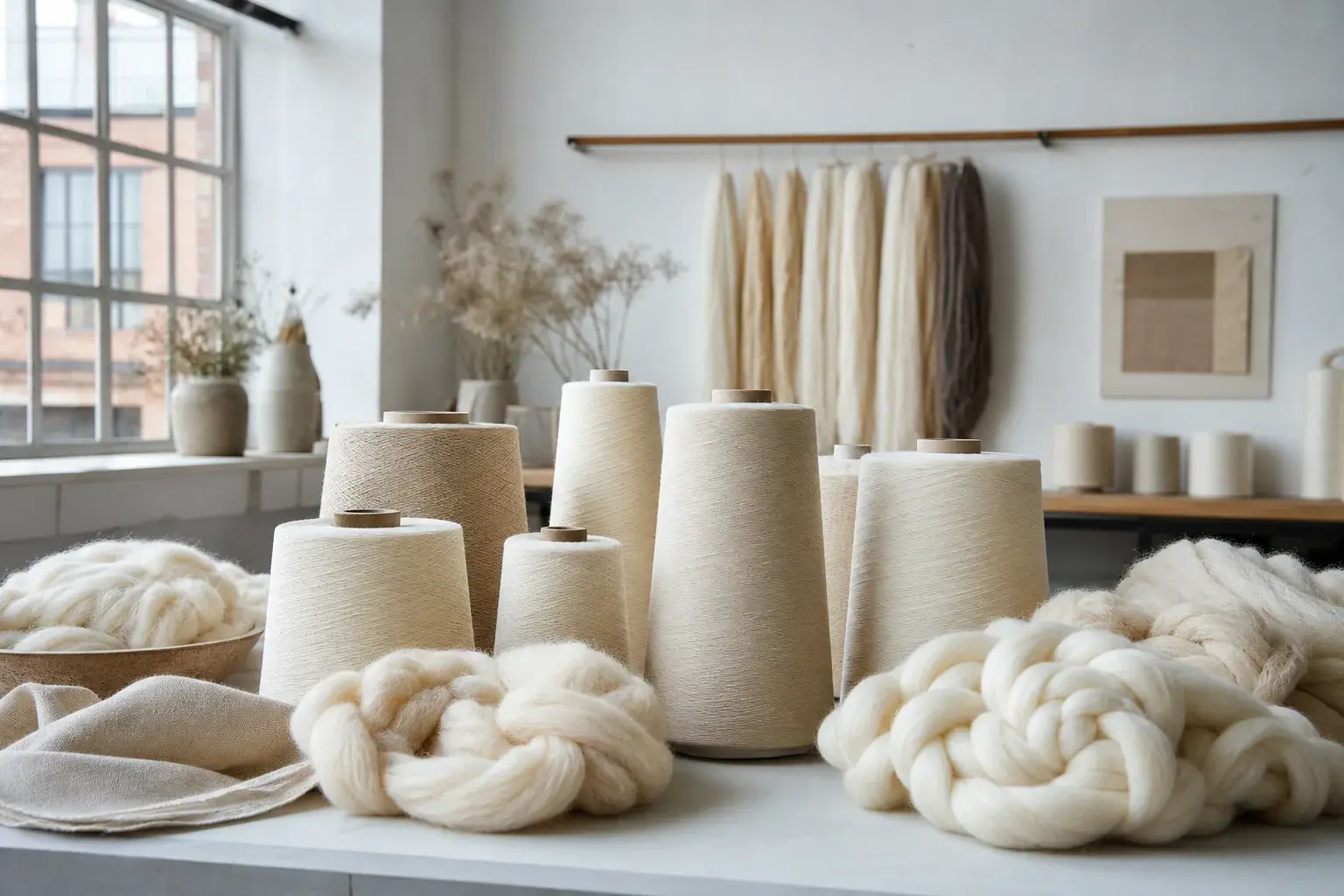
Sweater yarn weight and price move together. A heavier finished garment uses more yarn, and yarn is bought by the kilogram. The finished weight depends on gauge, stitch, size and the yarn count you choose — for example, a two-ply fine merino at around Nm 2/26 knits a very different garment from a chunky single-ply. Ask the factory to lock the yarn count, ply and target finished weight per size before quoting; a size L uses more yarn than a size S, so a single average weight can hide a wide range.
- Confirm micron and yarn count (Nm) for the actual yarn to be used, not the category name
- Confirm target finished weight per size, measured after washing
- Ask how yarn loss is calculated — cutting waste, linking waste and sampling all consume yarn
- If the factory quotes on your sketch without a weight, expect the price to change once the sample is weighed
Colour count and yarn minimums
Yarn mills sell dyed yarn by the kilogram with a minimum per colour. A stock colour that the mill already holds can be bought in small lots; a custom-dyed shade has a higher minimum and a longer lead time. This is why a first order of 30 pieces in one colour is priced differently from 30 pieces across three colours: each colour carries its own yarn minimum, and yarn left over after knitting belongs to that shade and cannot be reused for another buyer. For a single sample, the mill minimum is often around one kilogram even though one sweater uses far less — the balance is held for your bulk order if you proceed, and is wasted if you do not.
Plain, cable and jacquard are three different jobs
Construction is the largest variable after yarn. A plain crew neck, a cardigan with pockets and buttons, and a multicolour jacquard cardigan are three levels of knitwear manufacturing cost. Jacquard and Fair Isle need a colour programme, more yarn changes, more time on the machine and more linking care; the price depends on the specific pattern and cannot be read off a plain-knit unit price. Cardigans add button attachment and buttonholes; shawl collars and belts add knitting and linking time. If your design is not a plain pullover, expect the factory to quote it after seeing the artwork and, usually, after a sample.
Labels, embroidery and packaging
Branded items are normally quoted as separate lines. Woven neck labels, care labels and hangtags have their own suppliers and minimums, so on a 30-piece run their setup cost is spread over few garments. Embroidery is priced on the size and stitch count of your logo, plus a digitising and machine setup charge that is the same whether you make 30 pieces or 300. Custom polybags and boxes follow the same logic. Keep these lines visible in the quote: they are where a small first order carries the most fixed cost per piece, and where you can decide what to defer until bulk.
Custom sweater sample cost vs bulk price
A bulk unit price is calculated over the run: yarn, knitting, linking, washing, pressing and packing divided across 30 or more garments. A first sample is a different job. It includes pattern and technical development, a yarn purchase at the mill minimum, machine programming, one garment made and checked by hand, and any embroidery or label setup — all for a single piece. That is why a sample fee is higher than the bulk unit price, and why comparing the two directly is misleading. The factory brief you send before sampling decides how much of that development is guesswork.
- Ask for the sample fee and the bulk unit price as two separate figures
- Ask whether the sample fee is credited against the bulk invoice once you confirm — at Langfield it is, on any later bulk order
- Ask for sample lead time and bulk lead time separately; a sample in 5–7 working days does not mean bulk ships in a week
- Ask what is included in the sample: yarn, development, embroidery, labels, and whether shipping is extra
Merino sweater FOB price versus landed cost
A factory quote is normally ex-works or FOB — the garment ready at the factory or at the Chinese port. International freight, import duty and VAT in your country are separate, and a courier collects the last two from you at delivery. A quote that looks cheap FOB and one that looks expensive DAP may land at the same cost. Always ask which Incoterm the price uses and read our guide to import VAT and duty on a small knitwear order before you set a retail price. A first Langfield order is quoted as the garment value plus DHL freight to your address; you pay import duty and VAT on delivery. Later bulk orders can be quoted EXW, FOB, CIF or another common Incoterm. Production starts after a 50% deposit, and the balance is paid in full before shipment.
What to send before asking for a price
The closer your brief is to a real garment, the closer the first quote is to the final one. A custom merino sweater manufacturer can only price what it can see.
- Style: pullover or cardigan, neckline, sleeve, pockets, buttons, belt
- Size range and the measurements you already have
- Yarn preference: 100% merino or a blend, micron if known, machine-washable or not
- Number of colours and pieces per colour
- Whether you need custom labels, hangtags or embroidery on the first order
- Destination country, so freight and Incoterm can be stated
- Target quantity for the first run and any expected repeat
Langfield quotes a first run as a garment price that includes knitting, linking, washing, pressing and packing, with labels, embroidery and courier stated as separate lines and the sample fee credited toward bulk. Trial orders start at 30 pieces total, with at least 10 pieces per selected colour-size combination — see our MOQ guide for how that works. If you want a quote built on your own garment rather than a generic number, send the brief and we will tell you which lines are fixed and which move with weight and quantity.