Designer, Pattern Maker, Knit Programmer: Why One Photo Stalls a Sweater Sample
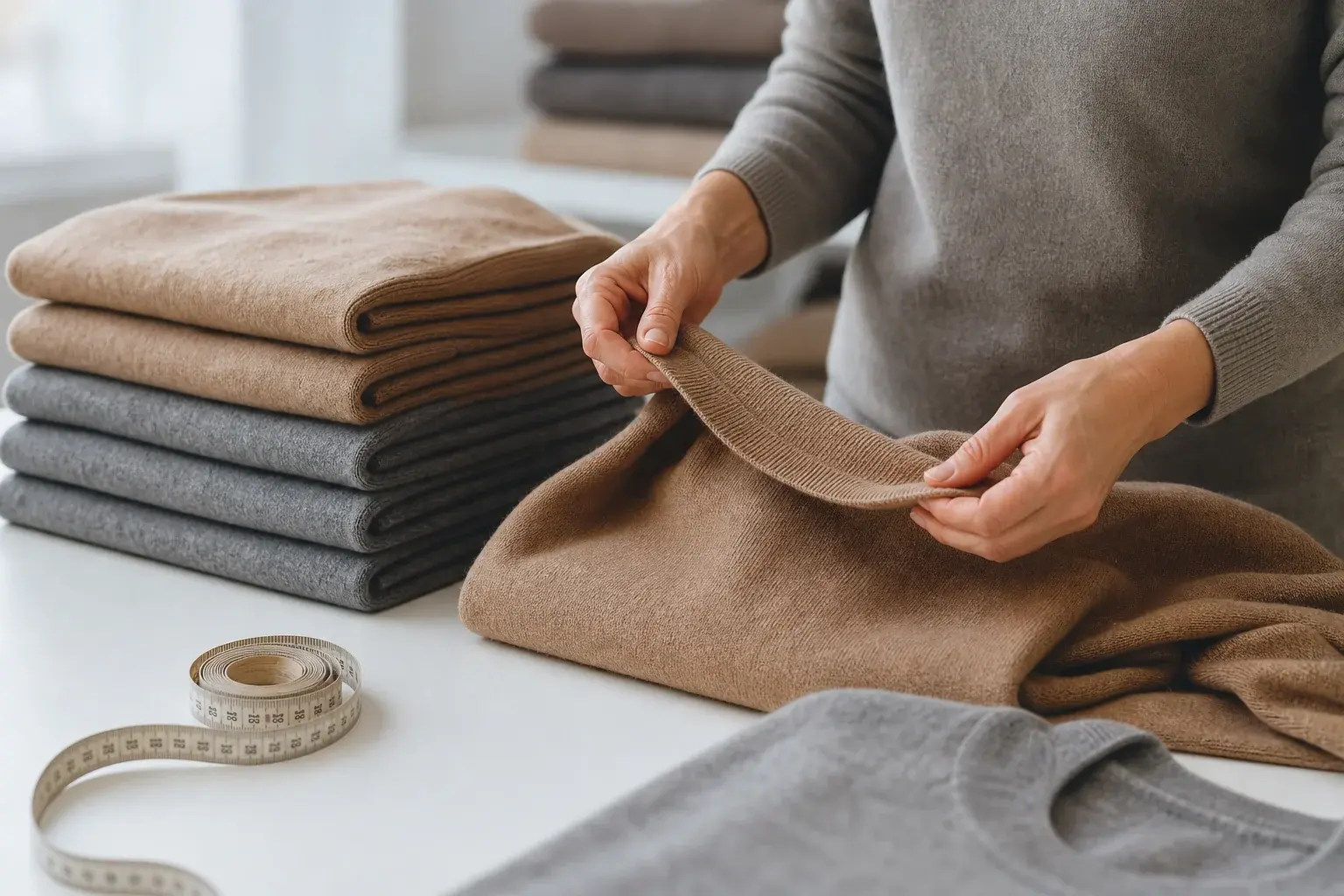
A brand sends one photo of a sweater it wants made. The factory passes it to the pattern maker. The pattern maker sends it back: this needs a designer first. The brand is puzzled, because the factory was supposed to be the expert. Nobody is wrong. The photo has skipped a step, and the step belongs to a role most small brands have never had to name.
This article explains the three technical roles behind a knitted garment, what a photograph can and cannot tell them, the trouble that follows when sampling starts from a picture alone, and how to plan so the first sample is knitted instead of discussed. It is written for brands that design in pictures. That is most of the brands we work with.
Three roles, three outputs
In a knitwear factory the work between a picture and a knitted sample is done by three people, or by two people doing three jobs. The order of the jobs does not change.
- The designer decides what the garment is. Collar height, placket length, how many buttons and how far apart, which rib, how wide the edging, which side an opening sits on, where the logo goes and how big. The output is a dimensioned flat drawing of the front, back and details, a finished-measurement table, and a trim list. Every line is a single number.
- The pattern maker, called the technician in many factories, turns centimetres into stitches and rows. The conversion uses the density of a swatch knitted in the actual yarn on the actual machine. The output is the knitting sheet: stitch counts, shaping, the knitted-down size before washing worked back from shrinkage, and yarn consumption. The pattern maker calculates. The pattern maker does not choose.
- The knit programmer turns a cable, a jacquard, an intarsia block or a rib transition into a machine program. The programmer needs stitch counts from the pattern maker before a cable can be set. The programmer does not decide how wide the cable is.
A photo lands on the pattern maker's desk as a set of ranges and open questions. The pattern maker cannot calculate a range. When they say they need a designer, they mean the design is not finished, not that the picture is bad.
What a photo tells a factory
A clear front photo settles a good deal. Silhouette, collar type, set-in or raglan sleeve, roughly which rib, whether there is a placket and how many buttons, where colours sit, approximate proportions of body to sleeve. Back and side photos and close-ups of the collar, cuff, hem and placket settle more. A factory that reads knitting can take a photo a long way.
What a photo cannot tell a factory
- Gauge. A photo that looks fine-gauge is often knitted heavier once the buyer picks the yarn. Gauge follows yarn count, not the picture, and everything downstream follows gauge.
- Finished measurements. A photo has no scale. Chest, length, sleeve length and collar height are the buyer's decisions, and nobody else can make them from an image.
- Density. Stitches and rows per ten centimetres come from a swatch in the real yarn on the real machine. They cannot be read off a picture, and a factory that quotes them from a picture is guessing.
- Which side. Rendered design boards, including AI-generated ones, often disagree between views. Buttons appear on both sides, a hem point moves from one view to the next. The factory cannot pick.
- Geometry that closes. Boards often carry measurements marked approximate that do not form a shape. Side lengths given as a range, a width that does not meet the hem lengths. Someone has to fix one number for each line.
- Rights. A brand mark, a licensed character or a borrowed logo needs written confirmation that the brand may use it before it is embroidered or woven into a label. A picture carries no permission.
AI-generated design boards deserve a separate word. They look like tech packs. They have callouts, measurement arrows and detail crops. Treat them as a mood board with intent. The views were generated separately, so they do not agree with each other, and the numbers were typed, not measured. They are a good start and a poor specification.
What goes wrong when sampling starts from a picture
- The factory guesses. The sample matches the factory's reading of the photo, not the garment in the buyer's head. A second sample follows, with its own fee and its own round of courier and waiting.
- The pattern maker waits. Each open question is a round trip across time zones. The sample sits idle while the question is answered, and the brand reads the silence as slowness.
- Gauge is picked after the pattern is made. The pattern is now wrong. The pattern maker starts again.
- Yarn is changed after the swatch. Density changes with the yarn, so every stitch count changes with it. The knitting sheet and the program are redone.
- The logo arrives after the sample. Placement and size were left blank, so the embroidery is added later, moves the fabric, and sits where nobody chose.
- Measurements were given as ranges. The factory takes the middle. The buyer wanted one end. The sample is right by the brief and wrong for the buyer.
- The brand name is stitched before the right to use it is confirmed. The piece cannot be sold, and sometimes cannot be shipped.
None of these is a knitting problem. Each one is a decision that was not made before knitting began, and each one costs a sample round. How a brief avoids them in the first place is covered in how to brief a knitwear factory. The rest of this article is about the design step specifically.
How to plan before the first message
- One reference style per sample. A collage of twelve pieces is a season, not a sample. Point to the one garment and say: this fit, these details.
- Decide the yarn direction before the gauge. Fibre, and whether the garment should be light, mid or heavy. The factory proposes the count and the gauge from that. Deciding gauge from a picture is the most common way to restart a sample.
- One colourway for the first sample. Colour is proven on the yarn, not on the garment. If the shade is not on a stock card, read what grey scale grade 4 means before asking for a dye-to-order.
- Find a size chart. A garment you own and like, measured flat, or the published size chart of a brand whose fit you are targeting. Either one is a better starting point than a number read off a photo.
- Have the logo ready as a vector file, with its height and its position in centimetres from a seam, and the written confirmation that the brand may use it.
What to send with the first message
- Front and back photos of the one reference style, plus close-ups of the collar, cuff, hem, placket and any opening.
- Your fit intent in words: slim, regular or oversized; cropped, regular or long; where the hem should sit on the body.
- The measurements you know, in centimetres, laid flat. Leave the ones you do not know blank. A blank is honest; a guess becomes a specification.
- The trim list: button material and size if you have a preference, label type and position, hangtag.
- What stays open. Say which lines you are happy for the factory to decide and which you must approve.
Let the factory do the design step, then approve it
If you do not have a designer, the factory can do the design step for you. Ask for it by name. The factory reads your photos, fixes every range to one number, and sends back a dimensioned flat and a measurement table with each line tagged: from your spec, the factory's proposal, or set on the sample. You change the numbers you disagree with. The pattern maker starts only after you approve the flat.
This moves the questions to the front of the process, where answering them is cheap, instead of leaving them inside the sample, where answering them costs a round. It also gives the pattern maker a finished design instead of a photograph, which is what they asked for.
Lock the order of decisions
Yarn, then gauge, then flat and measurements, then swatch, then pattern, then program, then sample. Changing an earlier step reopens everything after it. A brand that changes yarn after the pattern is made has not asked for a small change. It has asked for a new sample, and should expect to be charged for one.
Some lines are set only on the sample and should be left open on purpose: density, knitted-down size, the exact stitch count of a cable, yarn consumption. Agree the measurement tolerance when the sample is approved, not when the bulk arrives.
How we handle a new style from a photo
On a new style that arrives as pictures, we do the design step before the pattern maker sees it. You receive a dimensioned flat of the front, back and details, a measurement table with every line tagged, and a short list of the decisions we made for you. Approve it or change the numbers. Pattern making starts after that, and the sample is knitted to a design both sides have read. Send the photos.